
Navigazione
Accesso utente
SIAMO ANCHE QUI:


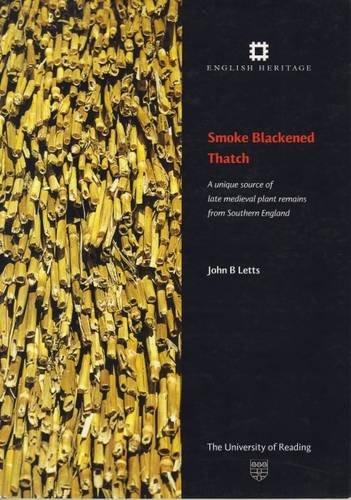
Smoke Blackened Thatch: A Unique Source of Late Medieval Plant Remains from Southern England
CODICE: ISBN 1850747040 EAN 9781850747048
AUTORE/CURATORE/ARTISTA :
Author: John Letts
EDITORE/PRODUTTORE : English Heritage
COLLANA/SERIE : -
DISPONIBILITA': Esaurito
TITOLO/DENOMINAZIONE:
Smoke Blackened Thatch: A Unique Source of Late Medieval Plant Remains from Southern England
PREZZO : EUR 25,00€
CODICE :
ISBN 1850747040
EAN 9781850747048
AUTORE/CURATORE/ARTISTA :
Author: John Letts
EDITORE/PRODUTTORE:
English Heritage
COLLANA/SERIE:
ANNO:
1999
DISPONIBILITA':
Esaurito
CARATTERISTICHE TECNICHE:
XIV-62 pages
225 colour illustrations, 23 b&w illustrations
Paperback
cm 21 x 29,5 x 0,6
gr 362
NOTE:
2nd Revised edition
DESCRIZIONE:
Publisher's description and from the back cover:
This publication assesses the archaeobotanical significance of late medieval Smoke Blackened Thatch (SBT) - the best preserved source of medieval plant remains so far discovered. Over 300 examples have been identified in Southern England, providing researchers with their first opportunity to examine whole-plant specimens of medieval cereals, legumes and crop weeds, many of which are proving to be rare or extinct in Britain.
The report provides the historical and botanical background of the wild an cultivated material that were used for thatching in the past. It also reveals many of the techniques that have helped thatched roofs survive for over 500 years. These findings have direct implications for archaeology, building conservation, modern thatching and agricultural botany - a significance reflected in joint publication by English Heritage and The University of Reading.
Contents:
page VI List of Figures
XI Foreword and Acknowledgements
XII Glossary
1 Introduction
3 Thatching in England
9 The formation and survival of SBT
12 Thatching materials past and present
12 a Water reed (Phragmites australis)
13 b Alternative wetland species
14 Fen sedge (Cladium mariscus)
14 Reedmace (Typha latifolia and T. angustifolia)
14 Bulrush (Schoenoplectus lacustris)
15 Black bog rush (Schoenus nigricans)
15 Shoof (marsh hay)
15 c Heath, bog and moorland species
15 Broom (Cytisus scoparius)
16 Gorse (Ulex europaeus)
16 Bracken fern (Pteridium aquilinum)
16 Heather (Calluna vulgaris)
17 d Cereal straw
17 Medieval cereals
18 Rivet wheat (Triticum turgidum sbsp. Turgidum)
20 Bread wheat (Triticum aestivum sbsp. Aestivum)
21 Rye (Secale cereale sbsp. Cereale)
22 Barley (Hordeum vulgare)
23 Cultivated oat (Avena sativa)
24 Medieval cereal harvesting and crop processing
28 Survey and sampling
28 Results
31 The bioarchaeological evidence
31 a The 'ecology' of thatched roofs
32 b Bioarchaeological implications of ancient thatch
35 c Medieval cereals in SBT
39 d Analysis of arable weeds in SBT (with a contribution by Dr Dominique de Moulins)
42 e Analysis of beetles in SBT (with Dr David Smith)
42 Results and discussion
44 Thatching technique
46 Conclusions
47 References
51 Personal communications
52 Appendix 1 SBT Sample Register
60 Appendix 2 Table 1: Thatching Material
61 Appendix 2 Table 2: Coleoptera (beetles)
GENERE: Libri ,Saggi ,